The Poppi Wake-Up Call: Your Brand Doesn’t Need More Content. It Needs an OS.
Poppi didn’t “get lucky on TikTok.” It built a machine so consistent that virality became a side effect, not the business model. In March 2025, PepsiCo agreed to acquire Poppi for $1.95B (net $1.65B after tax benefits), and the deal closed May 19,
Poppi didn’t “get lucky on TikTok.” It built a machine so consistent that virality became a side effect, not the business model. In March 2025, PepsiCo agreed to acquire Poppi for $1.95B (net $1.65B after tax benefits), and the deal closed May 19, 2025.
If you’re a founder, CMO, or creative director, here’s the uncomfortable part: the brands winning 2025 aren’t posting the most. They’re running on a campaign operating system, a Campaign OS, where packaging, creators, retail, and social aren’t separate “teams,” they’re one compounding loop. And no, you can’t copy that OS from a cute case-study slide. That’s like trying to steal someone’s physique by screenshotting their gym selfie.
Nufero’s Flywheel System exists for a simpler premise: your brand doesn’t need more content. It needs its own OS, tuned to your category, your price point, and your cultural lane.
Why Poppi Won: Brand Before Benefits
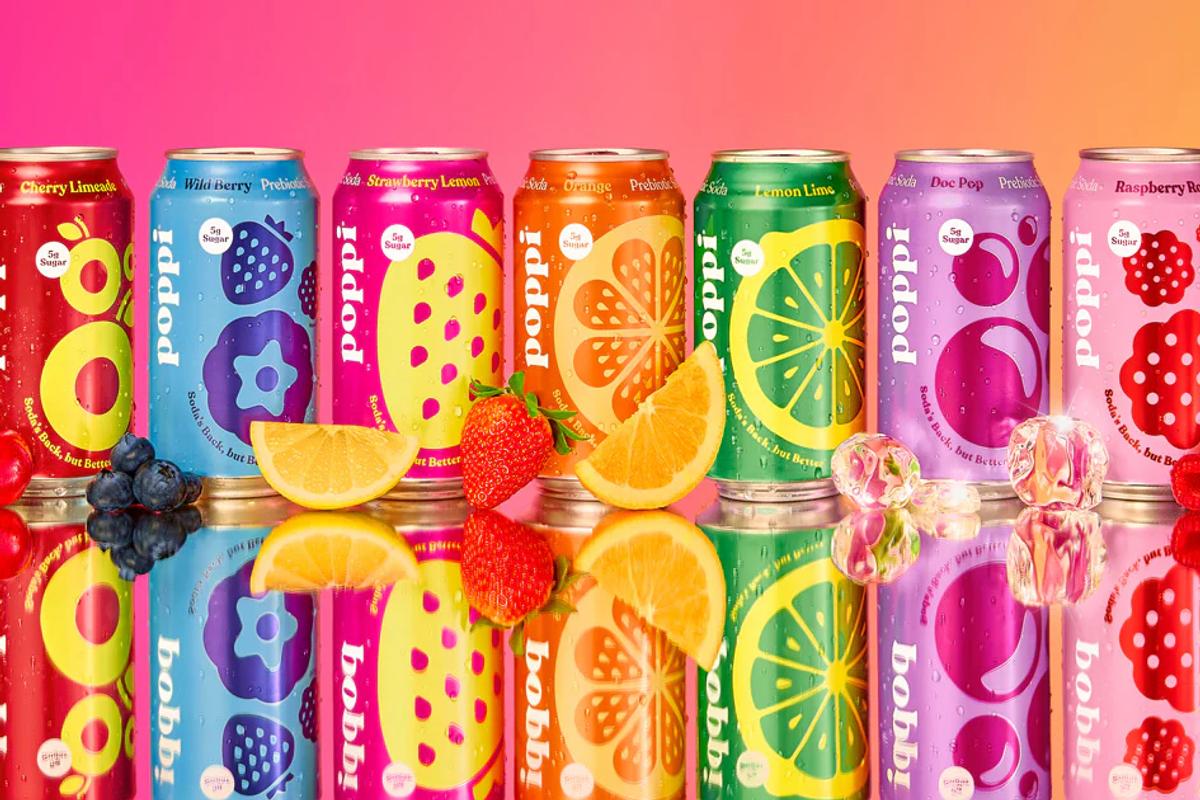
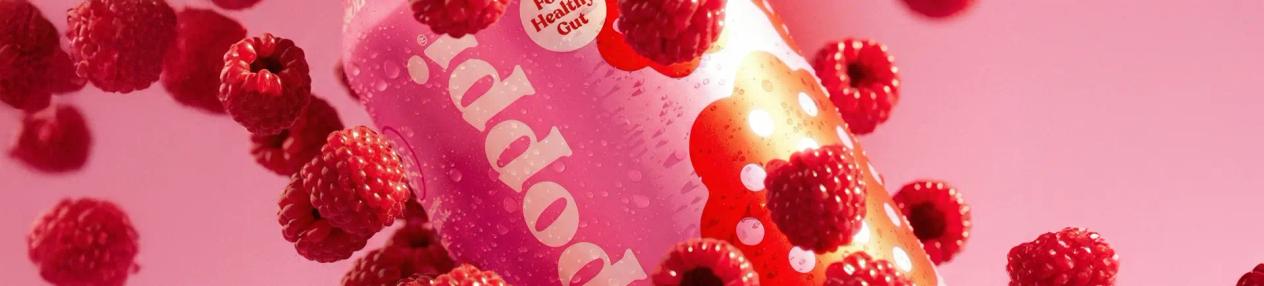
Most “better-for-you” brands lead with ingredients and health claims. Poppi led with something harder: identity. It reframed “functional drink” into “prebiotic soda” living at the intersection of wellness, fashion, and internet culture. Their visual world is loud on purpose, bright blocks, bold type, fruit icons, because it has to pass two tests: the shelf test and the scroll test.
They also gave people language they could repeat (“soda is back” energy), not facts they’d forget five seconds after reading. That’s what a Campaign OS does: it makes every new move reinforce the same memory instead of resetting the audience every week.
What People Think They’re Copying (And What They’re Actually Missing)
On the surface, Poppi looks like chaos: trends, flavors, creator moments, retail pushes. Underneath, it’s a simple OS tuned to how people actually discover and adopt products.
Packaging OS: The can isn’t “design.” It’s a recurring ad unit. It reads fast, photographs clean, and shows up naturally in routines, fridge restocks, GRWMs, desk days without screaming “sponsored.” (The brand reportedly hit $500M+ in 2024 sales, which doesn’t happen from vibes alone.)
Creator OS: Poppi doesn’t treat creators as last-minute megaphones. They treat creators as environment. The product appears in real life, repeatedly, until it feels normal, then “official partnerships” just confirm what the audience already accepted.
Retail OS: Retail isn’t distribution afterthought. It’s live media. End caps, fridges, sampling, QR hooks, the store becomes content, and content drives people back to the store. The point isn’t “get into big retailers.” The point is: what does your OS do once you’re there?
Feedback OS: Most brands report performance. Poppi responds to it. When sentiment shifts, creative shifts. When perceptions change, the message tightens. Copying colors and formats without copying the feedback loop is just brand cosplay.
Where Most Brands Leak Budget
Here’s what Nufero typically sees in audits: packaging that looks great in Figma and disappears in a cold box; feeds full of “smart” content that never leaves the brand’s own channels; influencer tests that spike for a week and die; retail wins that never show up in content; content wins customers can’t find in store.
It’s rarely a talent problem. It’s an OS problem. Every function is running its own mini-strategy: brand chasing taste, social chasing trends, sales chasing doors, performance chasing ROAS. Without an OS, you pay full price for every impression — and every launch starts from zero because nothing compounds.
Nufero’s Flywheel System: Your Campaign OS, Not Poppi’s
Nufero doesn’t sell “Poppi templates.” We build your OS around how your brand actually grows.
1) Cultural OS — One non-negotiable story.
The one sentence customers repeat when they talk about you. What you’re for/against. The belief that shows up in visuals, tone, and behavior. You don’t steal this. You build it.
2) Visual OS — Shelf + feed, same language.
Packaging and design that passes the 10-foot / 2-inch test, then stretches across merch, creator templates, retail fixtures, OOH, without turning into a logo soup.
3) Channel OS — Three repeatable plays.
Not twelve experiments. Three moves that compound: one hero UGC/community format, one retail/distribution narrative, and one quarterly artifact (merch/kit/format) that gives people a reason to show the brand.
4) Feedback OS — The loop that learns.
We identify what’s working, convert it into templates/playbooks (not “insights”), and kill or refactor what isn’t fast. That’s how compounding becomes real, not motivational.
The point
Poppi is the wake-up call. It shows what happens when a brand runs on a tight Campaign OS instead of a loose collection of content ideas. The goal isn’t to copy Poppi. The goal is to admit your brand needs an OS built deliberately, tuned to your realities, designed to compound.
If you want this system built for your CPG brand, start with Nufero’s Stage 1 AI Assessment. It maps your signals, your leaks, and the levers that will actually compound growth, before your next “big launch” turns into another 48-hour memory.