Taste Is the Last Thing They Can't Copy
You used to win on access. Get the product made, get it online, buy attention on the platforms, and you had a business. The plumbing was the hard part, and whoever ran it best won.
You used to win on access. Get the product made, get it online, buy attention on the platforms, and you had a business. The plumbing was the hard part, and whoever ran it best won.
That's over. The plumbing is free. Anyone can launch a store by lunch, source from the same factories everyone else uses, and buy the same ads with the same targeting. AI compressed it further, a solo founder now ships in a week what an agency used to take a quarter to do. Same access, same tools, same speed, for everyone.
So what's left to win on? One thing. Taste. It's the only advantage left that can't be cloned.
Taste is judgment, not decoration
People hear taste and picture a nice font. That's the least of it. Taste is the thousand small calls about what belongs and what doesn't, made by someone who actually understands a specific group of people. Which reference lands and which reads try-hard. When to go loud and when restraint says more. The gap between what customers claim they want and what they actually respond to.
That's why it can't be copied. A competitor can take your logo, your packaging, your ad creative, your exact words. What they can't take is the judgment underneath, because that judgment lives in a real read of a real culture. Copy the output without it and you get the tell every shopper feels but can't name: looks right, feels wrong.
And here's the part most founders miss. Taste isn't your personal aesthetic. It's relational. A brand has good taste when its choices match its people, not when they match some abstract idea of cool. The most beautiful brand in the world has bad taste if it's beautiful in a way its customers don't feel. So taste doesn't start with you. It starts with a question about them: who are these people, what do they believe, what world are they trying to live in? You can't have taste on behalf of people you haven't read.
How to build on it
Reading your people is the foundation. Here's what to do once you have.
Audit your rooms for disagreement. Your brand is a house, the loud front door of social, the one-to-one of an email, the considered space of a product page. Open your Instagram grid, your last email, and your product page side by side right now. Do they feel like one house, or three? Most brands lose the plot here, the grid says luxury and the product page says clearance. Taste is coherence. Fix the room that disagrees with the others first, it's your highest-leverage move this month.
Cut before you add. Under pressure the instinct is more, more features, more copy, more proof points. The tasteful move is almost always removal. Take your homepage hero and your last three posts and delete a third of the words. If the meaning survives, the cut was right. What you refuse to do signals as loudly as what you do.
Stop over-explaining. Brands with bad taste spell everything out because they don't trust the audience to catch the reference. Leave room. Assume the right people get it, that assumption is itself a signal of belonging. Getting the joke is how someone knows they're home. Look at your captions: if you're explaining the reference, you're talking to the wrong person.

Pressure-test against your best customers, not the average. Before you ship a campaign, ask whether your top fifteen percent, the believers, would recognize themselves in it. Not the imagined average buyer who doesn't exist. If the work doesn't feel like them, it won't travel.
Taste is how you win advocates
This is where it stops being abstract and starts compounding. Your advocates, the small group who don't just buy but believe and bring others in, aren't won with discounts or points. They're won with taste. They stay because the brand reflects them back to themselves better than they could put it into words. You gave their identity a shape, and now using it, wearing it, sharing it is how they express who they are.
That's the most valuable growth there is, the kind that spreads through belief instead of budget, from someone the listener already trusts. Get the taste sharp enough that your best customers see themselves in it, and you don't have to manufacture advocates. They're the natural result of having read your people well enough to build something they recognize as home.
Where this fits
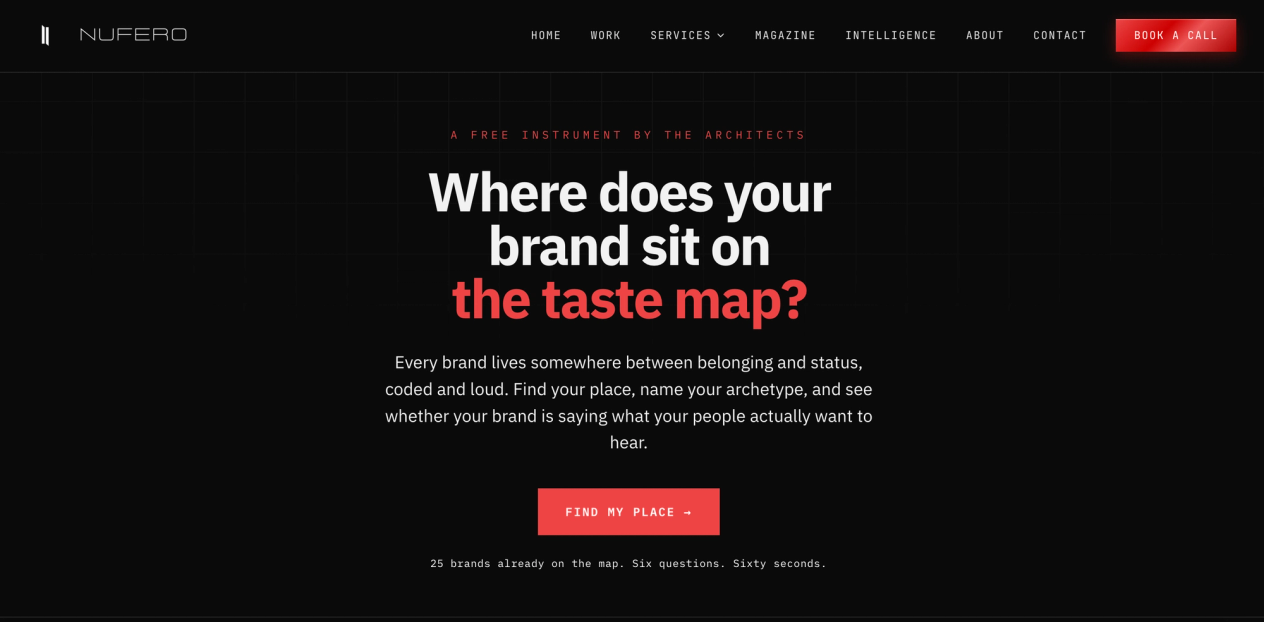
Taste is going to be a major focus for us in the back half of this year, one of a few things we're building toward, but a big one. It's why we made The Taste Map, the first instrument for placing a brand on the cultural field and naming what it is. Not the whole plan, but a real pillar of it, and the lens we increasingly read culture through.
Because when the plumbing is free and the tools are universal and the speed is infinite, the one thing that's still yours is the judgment about who your people are and what they love. Everyone can copy the what. Nobody can copy the why. That's taste, and it's worth building on.
See where your brand sits. The Taste Map is free, and it's the first step toward building a world your people can't help but belong to.