Off-Platform Brand Communities in 2026
How to Build a Cult Audience That Actually Shows Up, Buys, and Stays
How to Build a Cult Audience That Actually Shows Up, Buys, and Stays
Social platforms are great for discovery. They’re also great at reminding you who’s in charge (hint: not you). If your brand lives entirely on Instagram, TikTok, or YouTube, you don’t own your audience, you’re renting attention from an algorithm that can change its mood overnight. In 2026, the brands that win won’t be the loudest on social. They’ll be the ones with off platform communities where attention compounds instead of constantly resetting back to zero like Groundhog Day with better fonts.
This is a practical guide to building a community that’s actually worth people’s time, not another empty Discord where the last message is “hey” from three months ago.
Why Off-Platform Communities Matter Now (Not Later)
Most brands ask the wrong question: “How do we get more followers?” The better question is: “How do we keep the right people close?” Off platform communities solve three real problems that social platforms will never fix because they’re not incentivized to:
Algorithm fatigue: your best people don’t see half of what you post.
Low LTV: one time buyers don’t become repeat customers because there’s no relationship loop.
Weak signal: you can’t tell who actually cares vs. who just scrolled while waiting for their Uber.
A strong off platform community gives you direct access without gatekeepers, clearer signals on who your real superfans are, and a place where trust deepens before conversion happens. This isn’t about scale first. It’s about density before reach, fewer people, more meaning, better economics.
Step 1: Choose the Right Community Format (Where Most Brands Faceplant)
Do not start with the platform. Start with how people want to show up. Launching email + Discord + Skool + a Telegram + a “members portal” all at once is how you create five ghost towns instead of one living room.
Use email when: you sell highconsideration services or premium products, you want long-form thinking (education, strategy, narrative), and your conversion cycle needs slow trust, not dopamine.
Use a private community (Skool/Circle/Geneva) when: discussion, feedback, and shared identity are the product; members learn from each other, not just from you; you plan to host drops, early access, rituals, or “insider” moments.
Use IRL extensions when: your brand is experiential, culture driven, or identity driven; you want stronger memory anchors; you can link real moments to digital follow ups (the move most brands forget).
Pick one format. Earn attention there. Then expand. Otherwise you’re just doing community cosplay.
Step 2: Give People a Reason to Join That Isn’t “Exclusive Access”
“Join our community” is not a value proposition. That’s a request. People join when there’s a clear exchange, when being inside makes something easier, clearer, or more meaningful than staying outside. Ask yourself: what do members get here that they don’t get on social? What becomes easier because they’re inside? What identity are they stepping into?
What actually works isn’t “early discounts.” It’s early insight, process over polish, context behind decisions, and participation in something unfolding (not static content dumps). Think less “VIP list” and more inner circle, the place where the story gets written, not just announced.

Step 3: Design for Participation, Not Consumption
Most communities fail because they turn into a content dump. If people only consume, they leave. Your job isn’t to “post more” inside the community, your job is to create reasons to respond. Participation creates psychological ownership. Ownership creates loyalty. Loyalty creates compounding growth.
How to keep it alive without becoming a full time camp counselor: ask for opinions before decisions are made, share drafts not final versions, invite members to react/remix/contribute, and spotlight members regularly (not just brand announcements). If your community doesn’t make members feel like the brand is partially theirs, you’re just running a quieter Instagram.
Step 4: Use Community Signals to Guide Your Content and Campaigns
Your off-platform community shouldn’t replace social. It should power it. Pay attention to what questions repeat, what topics spark real discussion, and what members share without being asked. That’s your signal stack, it tells you what content to create next, what offers to refine, and what language actually resonates.
This is the cheat code: your community becomes the R&D lab for your public storytelling, so you stop guessing and start shipping what’s already proven to land emotionally.
Step 5: Connect Community to Revenue Without Killing the Vibe
Monetization should feel like a continuation, not an interruption. The fastest way to kill a community is to treat it like a sales funnel with a chat feature.
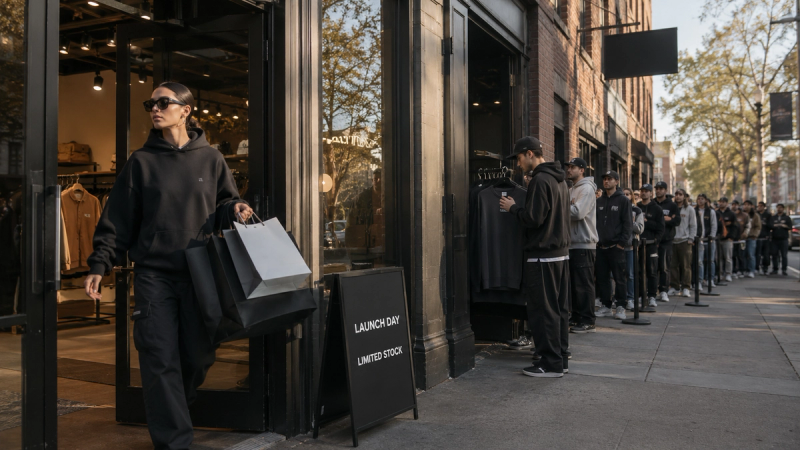
What works: soft launches inside the community before public release, limited drops tied to shared moments or milestones, offers framed as participation (not promotion). What doesn’t: constant selling, random discount codes, and using the community like a coupon distribution list. The goal isn’t to extract value, it’s to circulate it.
What This Looks Like When Done Right
A healthy off platform community usually has fewer people than your social following, feels more personal than your website, converts better than paid ads, and generates word-of-mouth you can’t manufacture. It becomes the emotional backbone of your brand. Once that exists, growth stops feeling fragile because you’re not dependent on the algorithm’s feelings that week.
The Real Shift in 2026
Brands that rely only on platforms will keep chasing reach like it’s a personality trait. Brands that invest in community will compound trust. Off platform doesn’t mean off strategy. It means building where attention actually stays, and where relationships aren’t one scroll away from disappearing.